Less chopping, more juice — a budget cold-press that saves prep time and cuts cleanup.
Making fresh juice at home can feel like more trouble than it’s worth: endless chopping, clogged strainers, and fast oxidation that dulls flavor and nutrients — not to mention the chore of scrubbing tiny parts after every batch. If you’re short on time or patience, those are the main reasons people abandon juicing.
The Juicer Machines with 5.8″ Large Feed Chute is a slow cold-press masticating juicer designed to address those pain points: a big chute reduces prep, 55 rpm extraction helps preserve nutrients, and dual non-clogging strainers deliver very dry pulp while making cleanup easier. Priced at $99.98 with an expert rating of 8.4/10, it’s a solid-value option—though single-speed operation and limited replacement parts may matter for heavy users.
A strong-value masticating juicer that delivers excellent juice yield and nutrient retention thanks to its slow 55 rpm operation and dual strainers. It’s easy to use and clean, with a time-saving large feed chute, though occasional reliability and accessory availability may concern some heavy users.
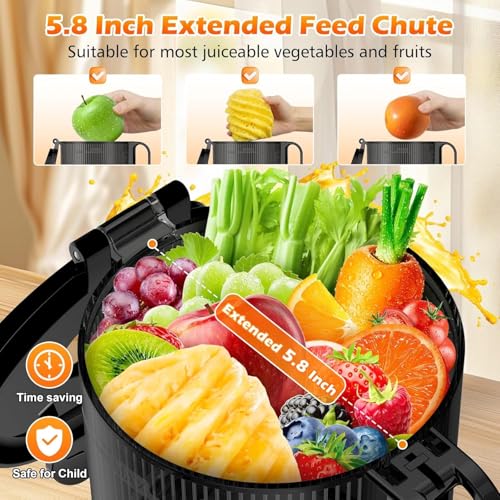
Large 5.8″ feed chute processes whole fruits and reduces prep time
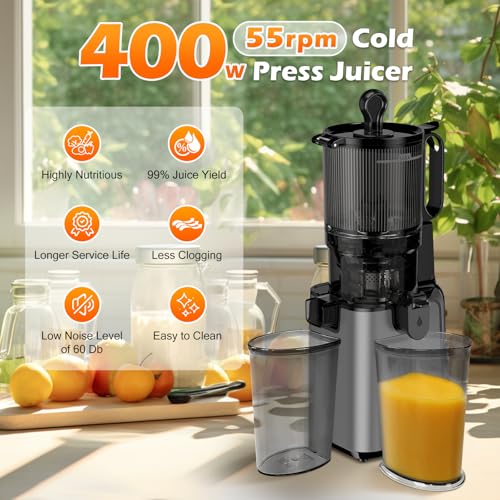
Slow 55 rpm masticating action preserves nutrients and minimizes oxidation
Dual non-clogging strainers deliver very dry pulp and high juice yield
Easy to assemble/disassemble with included cleaning brush and push rod
Sturdy housing with side vents for overheating protection and longer life
Cons
Single speed limits customization for very soft vs. very hard produce
Some users report occasional reliability issues and out-of-box failures
Replacement parts and accessories are limited compared with premium brands
Overview
This 5.8″ large-feed-chute cold-press juicer is a slow masticating juice extractor designed to make fresh juicing faster and more efficient for home kitchens. With a low 55 rpm motor, dual fine mesh strainers, and a roomy feed chute, the machine emphasizes nutrient preservation, minimal oxidation, and high extraction rates to squeeze more liquid out of fruits and vegetables while leaving dry pulp behind.
Key Design Features
5.8″ large feeding chute that accepts many whole fruits and longer vegetables without shredding or extensive pre-cutting.
55 rpm low-speed masticating mechanism designed to reduce heat buildup and oxidation for fresher-tasting juice.
Dual-layer fine strainers (approximately 0.3 mm mesh) that work together to reduce clogging and produce clearer juice.
Heavy-duty outer shell with side vents for improved heat dissipation and longer motor life.
Safety interlock feature that stops operation when the lid is opened.
How It Works — The Slow Masticating Advantage
The machine uses a single-screw auger that crushes and presses produce against a double-layer strainer, operating at a deliberate 55 rpm. The slow speed accomplishes three practical things:
Reduces frictional heat that can degrade enzymes and volatile flavors.
Lowers oxygen exposure compared with centrifugal juicers, slowing separation and browning.
Allows the dual strainers to filter more thoroughly, producing clearer juice with less pulp.
For leafy greens, celery, and herbs, a masticator typically extracts more usable liquid than a centrifugal unit. For hard roots and fibrous produce, it may take slightly longer but often results in drier pulp and better yield.
Performance and Real-World Results
Juice Yield: The dual-strainer design and slow auger frequently return a very high yield; many users report pulp that is noticeably dry, indicating efficient extraction.
Flavor & Texture: Cold-pressed extraction preserves delicate flavors and produces a smoother mouthfeel. Juices separate less and keep better for short-term refrigeration.
Speed: Because the unit is slow and thorough, overall throughput can be slower than high-speed centrifugal models, but the reduced prep time from the large feed chute often offsets that.
What You Can Juice (and What to Expect)
Whole apples, pears, and halved citrus (watch large citrus peel amounts) — excellent yield.
Carrots, beets, and other hard roots — very dry pulp but takes more time per batch.
Celery, kale, spinach, and wheatgrass — great extraction; leafy blends benefit from the masticating action.
Soft fruits like berries and peaches — yield can be slightly lower per volume versus hard fruits, but flavor retention is excellent.
Cleaning & Maintenance
The machine disassembles into three main parts quickly for straightforward rinsing and brushing.
Included cleaning brush helps clear the 0.3 mm mesh without force; the push rod makes loading and clearing the feed chute simple.
Wiping the heavy-duty outer shell is easy thanks to the smooth finish and accessible vents.
Recommended routine: rinse immediately after use, use the brush on the strainers, and occasionally deep-clean with a mild detergent to remove build-up.
Safety & Durability
Safety lock automatically shuts motor off if the lid is opened, which is important for households with kids.
Side vents prevent overheating during extended use; however, allowing the motor to rest between long batches is still recommended.
The exterior housing feels robust; internal components are primarily high-grade plastics and food-safe materials designed to balance durability with cost.
Who This Juicer Is Best For
Home users who prioritize nutrient retention and flavor over blitz speed.
People who value low-prep juicing — the large 5.8″ chute reduces chopping time significantly.
Those making daily or frequent fresh juices for 1–4 people who want a high-yield machine without premium-brand pricing.
Limitations to Consider
Single-speed operation means less flexibility for very delicate versus very hard ingredients.
While robust, the juicer is not from an ultra-premium brand — users wanting extensive accessory ecosystems or replacement-part availability may find options limited.
A few reports of early failures exist; inspect on delivery and register the product if warranty coverage is offered.
Quick Comparison: Cold Press vs. Centrifugal (At-a-Glance)
Feature
Cold-Press (This Juicer)
Centrifugal Juicer
Juice Yield
High
Medium
Nutrient Preservation
High
Lower (more oxidation)
Noise
Low–Moderate
Higher
Prep Time
Low if large chute used
Often higher (smaller feed chutes)
Cleaning
Moderate (strainers)
Quick (but pulp wetter)
What’s in the Box
Juicer body and motor assembly
Single auger and dual fine-mesh strainers
Pulp container and juice container (various capacities)
Push rod and cleaning brush
User manual and safety guide
Tips & Best Practices
For faster throughput, cut very large fruit (like large citrus) in half to avoid clogging at the throat despite the large chute.
Alternate hard and soft produce when juicing mixtures to keep strainers flowing.
Run a short water rinse through the auger and strainer immediately after finishing to prevent dried residue.
Don’t exceed recommended continuous run times; allow cool-down periods if making many batches.
Final Thoughts
If your priority is maximizing juice from produce while preserving flavor and nutrients, the 5.8″ large-feed-chute cold press juicer is a compelling midrange choice. It blends practical features — substantial feed-chute sizing, dual strainers for clearer juice, and a safety-focused design — with strong performance for everyday home juicing. It won’t have the accessory depth of premium-brand ecosystems, and occasional reliability outliers have been reported, but for most users the trade-offs are reasonable for the extraction and ease it provides.
Can I really put whole apples and long celery stalks into the 5.8″ chute?
Yes. The 5.8″ feed chute is designed to accept many whole fruits and longer vegetables, significantly reducing prep time. Very large items (oversized citrus) may still benefit from halving to avoid brief slowdowns at the throat.
How does cold-press (masticating) juicing differ from centrifugal juicing?
Cold-press juicing uses a slow auger to crush and press produce, minimizing heat and oxidation — this preserves enzymes and volatile flavors for fresher taste and longer short-term storage. Centrifugal juicers spin at high speed and tend to oxidize juice faster, producing more foam and often wetter pulp.
What are practical tips to get the most juice yield?
Alternate hard and soft produce during a blend to keep the strainer clear, feed produce in a steady but not rushed way, and use firm pressure only when recommended. Also, strainers should be cleaned regularly; clogged strainers reduce yield.
Is the juicer hard to clean because of the dual strainers?
Dual fine mesh strainers do require brushing, but the included cleaning brush plus the quick-disassembly design make the job manageable. Rinsing immediately after use prevents residue from drying into the mesh.
How quiet is the motor compared with other juicers?
Slow masticating motors are typically quieter than high-speed centrifugal units. Most users find the noise level very reasonable, although some report it can be slightly louder than top-tier quiet models — still well within comfortable home use.
What should I do if the juicer stops working or fails early?
First, check the safety interlock and power connections. If it still won’t run, consult the manual for reset steps and register the product if a warranty is provided. Contact the seller or manufacturer support for troubleshooting and potential replacement if it’s an out-of-box failure.
Can I juice leafy greens and wheatgrass effectively?
Yes. Masticating juicers excel with leafy greens. Expect very good extraction and drier pulp compared with centrifugal juicers, which often struggle to extract as much liquid from fibrous greens.
How long will fresh cold-pressed juice stay good in the fridge?
When stored in an airtight container and refrigerated immediately, cold-pressed juice from a masticating juicer typically stays best for 24–72 hours. Flavor and nutrient levels are highest within the first day.
This post contains affiliate links. Purchases may earn me a commission at no extra cost to you.