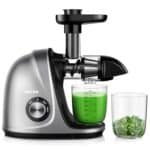
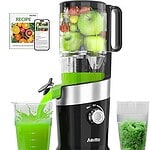
Quality cold-press juice with less mess — quiet, customizable, and family-friendly.
Tired of watery, foamy juice and a sink full of fiddly parts every morning? Fresh juicing can be a chore — many machines sacrifice yield, make a mess, or roar like a blender. If you want high-quality cold-pressed juice without the daily hassle, that trade-off becomes frustrating fast.
Enter the Ninja NeverClog Cold Press Juicer (JC151). This 2nd-generation slow juicer promises cold-press extraction with Total Pulp Control, relatively quiet operation, and dishwasher-safe components, all for $139.99. In testing it earned an 8.6/10 for striking a practical balance between juice quality and everyday convenience — a solid pick for families and health-minded home users who want great juice without the fuss.

An excellent home cold-press juicer that balances juice quality and everyday convenience. It’s engineered for quieter operation and customizable pulp levels, making it well suited to families and health-conscious individuals who want great juice without the hassle.
Overview
The Ninja NeverClog Cold Press Juicer (JC151, 2nd Gen) is a compact, countertop slow juicer designed to make fresh, high-quality juices at home with minimal fuss. It focuses on delivering cold-pressed results via a high-torque, low-speed auger and offers Total Pulp Control through two interchangeable filters: Less Pulp and Lots of Pulp. The 24 oz juice jug and 36 oz pulp container let you make larger batches, while the 150-watt motor is tuned for steady, non-stop juicing of fruits and vegetables that would challenge many centrifugal machines.
What’s included & first impressions
The box includes everything needed to start juicing immediately, plus a short Inspiration Guide with recipes. The unit’s charcoal finish and compact footprint make it easy to tuck on the counter or store under a cabinet.
Design, build and footprint
The JC151 uses a straightforward vertical slow-juicer design. The parts that contact food are mostly BPA-free plastic and stainless-steel elements in the auger and small blade areas. It locks together securely and has rubberized feet for stability during operation. The compact dimensions (approx. 12.11″D x 7.15″W x 15.93″H) are a plus for smaller kitchens.


Performance and juice quality
Cold-press extraction means slower auger rotation to crush and press produce rather than shred it. The outcome is a juice with less foam, better texture, and often a higher perceived nutrient retention compared with fast centrifugal juicers. The JC151 handles leafy greens, citrus, apples, carrots, ginger and softer fruits with steady results. Harder produce can sometimes squeak but generally processes without clogging.
Pulp control, capacity & batch performance
One of the standout features is Total Pulp Control. The two filter options change the pulp content dramatically: “Less Pulp” for clearer juices, and “Lots of Pulp” when you want more body and fiber. The 24 oz juice jug is big enough for multi-serving batches, and the 36 oz pulp container reduces interruptions for emptying during longer sessions.


Operation: controls, noise & safety
The JC151 keeps controls minimal: one-touch Start/Stop and a Reverse to clear jams. Because it’s designed for low RPM operation, the noise level is noticeably lower than most centrifugal juicers; however, some produce (firm apples, whole berries hitting the housing) can create intermittent squeaks that are more audible than the motor itself. Safety interlocks prevent the unit from running unless assembled correctly.
Cleaning and maintenance
Cleaning is straightforward: all parts that touch juice are dishwasher-safe (top rack recommended), and the included brush helps dislodge fibers from the filter and auger. Because the components are not excessively intricate, routine cleanup is faster than many cold-press models that have numerous tiny pieces.
Best use cases and limitations
This unit is targeted at home users who want high-quality cold-pressed juice without a huge countertop appliance. It’s ideal if you:
Limitations:
Tips & tricks for best results
Quick specifications (at-a-glance)
| Feature | Detail |
|---|---|
| Motor Power | 150 Watts |
| Juice Jug Capacity | 24 fl oz |
| Pulp Container | 36 oz |
| Speeds / Programs | Start/Stop, Reverse |
| Footprint (D x W x H) | 12.11″ x 7.15″ x 15.93″ |
| Dishwasher Safe | Yes (top rack recommended) |
| Weight | 7.93 lbs |
Final thoughts
If you’re focused on texture, yield and a quieter kitchen routine, this juicer hits the sweet spot for many home users. It’s not the fastest machine on the market, but the combination of larger collection vessels, Total Pulp Control, and a low-noise motor make it a strong all-around choice for everyday juicing. Expect to trade off prep time and throughput for improved juice quality and less foam compared with fast centrifugal units.
FAQ
The auger-based press extracts juice efficiently, leaving pulp that tends to be drier than what you get from centrifugal juicers. You should see noticeably better yield from dense produce like carrots and apples compared with blade-based machines, though extreme toughness (very large, whole roots) still benefits from proper chopping.
Yes. Low-speed cold-press juicers like this one are well suited to leafy greens and wheatgrass. For best results, pack smaller bundles of greens and alternate with firmer items (apple, cucumber) to keep the auger feeding consistently.
It’s significantly quieter than most centrifugal juicers, so early-morning juicing is more practical. That said, certain produce can create squeaks or mechanical sounds; operating on a stable surface and cutting ingredients into recommended sizes reduces these noises.
Rinse parts immediately after juicing to prevent residue from drying. Use the included brush for the filter after each session and run the top-rack dishwasher occasionally for a deeper clean. If you juice daily, a weekly inspection for buildup is a good habit.
This model is optimized for juices. While you can process soaked nuts for some milk extraction, it’s not a blender — nut milks may require extra strain and won’t be as smooth as those produced in specialized nut-milk machines or high-speed blenders. Smoothies are best made in a blender.
If juice quality, texture, and lower foam are priorities, yes. Cold-press juicing generally yields better-tasting juice that separates less quickly and retains a smoother mouthfeel. The tradeoff is slower processing and a little more prep time.
Use the reverse function periodically to clear any backed-up fibers, alternate ingredient hardness (soft/hard), and empty the pulp container when it approaches capacity. Pre-cutting produce to consistent sizes also reduces the chance of blockages.